Injectables · Dubai
Skin Boosters in Dubai
An injectable treatment that improves the quality of your skin rather than its volume. Microdroplets of hyaluronic acid and bio-remodelling actives are placed across the dermis to restore hydration, texture and elasticity — administered by DHA-licensed doctors at our Dubai clinic, with minimal downtime.
Medically reviewed byDr. Nihal HusseinAesthetic & Functional Medicine · DHA-licensedLast reviewed
- Session
- 30–45 minutes
- Downtime
- Minimal · 24–48 hrs
- Course
- 2–3 sessions, weeks apart
- Areas
- Face, under-eyes, neck, hands
What Are Skin Boosters?
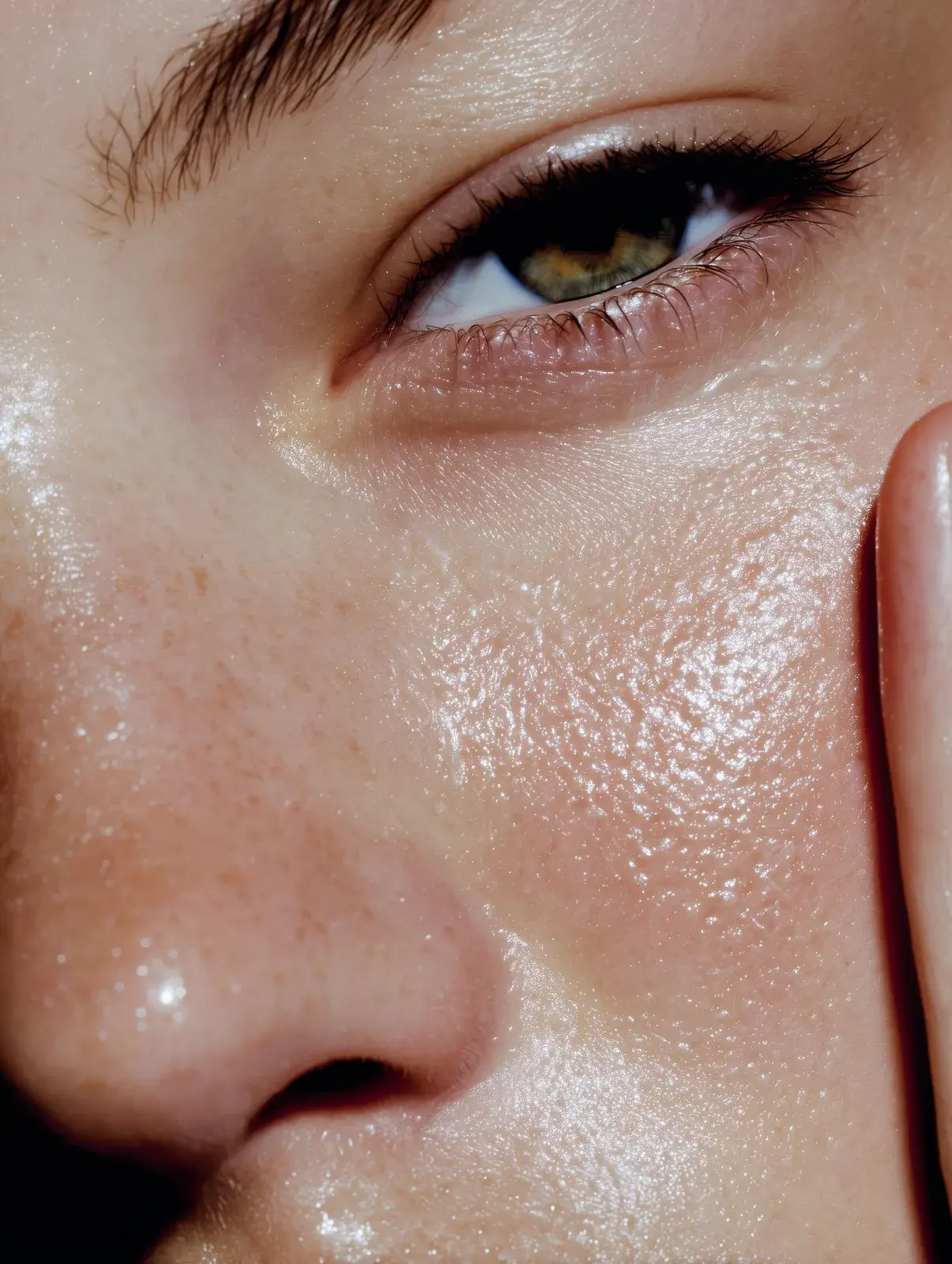
Skin boosters are an injectable treatment that delivers micro-doses of stabilised hyaluronic acid into the skin to improve hydration, texture and elasticity — rather than adding volume like a dermal filler.
They are designed to improve overall skin quality, not to add volume or change facial contours. Unlike a dermal filler — which is placed to shape and lift a specific area — a skin booster uses soft, stabilised hyaluronic acid, often combined with vitamins, amino acids or peptides, spread in microdroplets across the skin. The hyaluronic acid binds water, restoring moisture balance and improving elasticity from within.
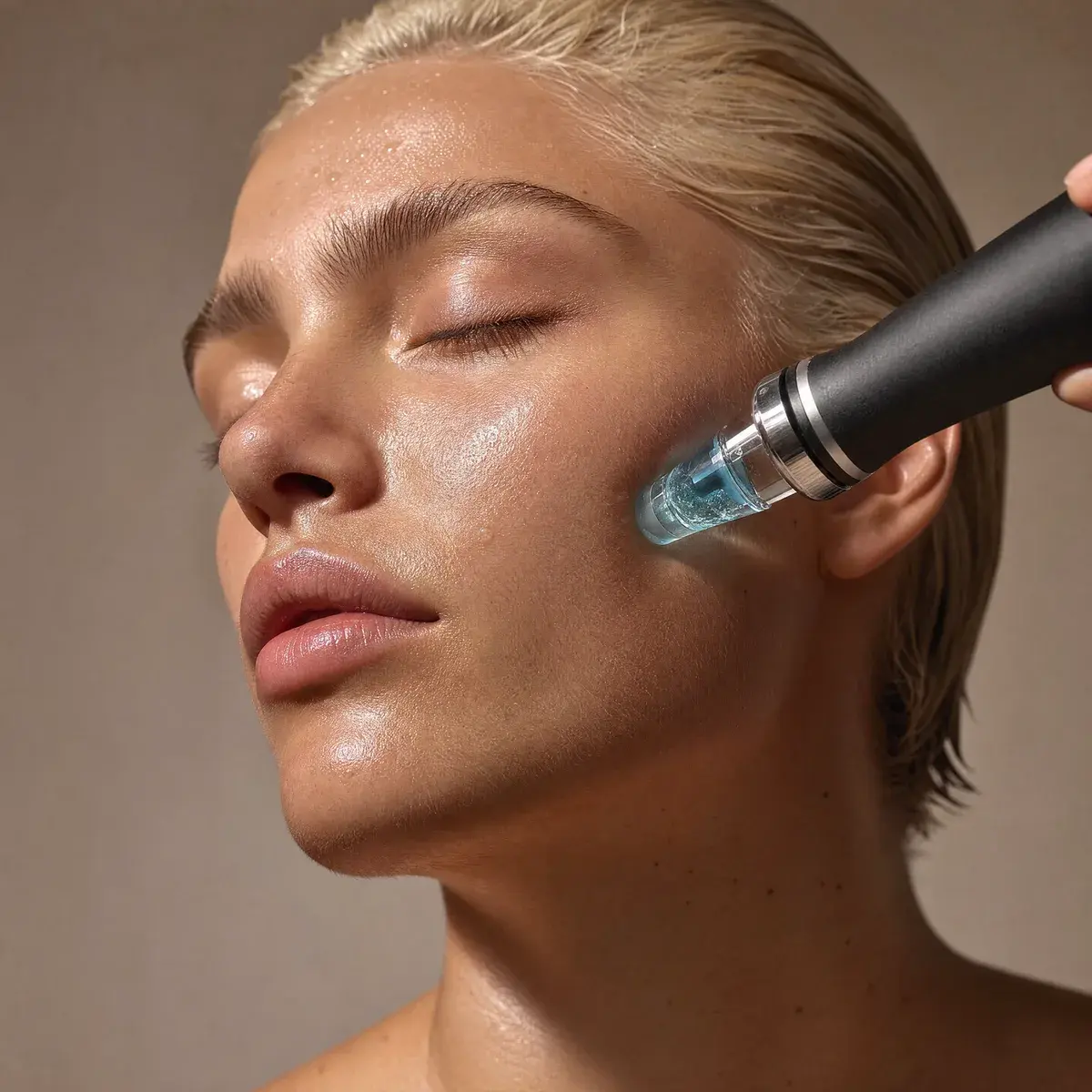
Delivered into the dermis through fine micro-injections, the actives also prompt the skin to remodel itself over the following weeks — supporting its own collagen and elastin so texture, firmness and surface smoothness improve gradually. This is why skin boosters are described as a skin-conditioning treatment rather than a filler.
At Shookra we work with several established formulations. Hyaluronic-acid bio-remodelling boosters such as Profhilo focus on deep hydration and firmness, while polynucleotide boosters (sometimes called salmon-DNA boosters, e.g. Rejuran) support cellular repair. Your clinician selects the formulation and protocol to suit your skin at consultation.
What Do Skin Boosters Treat?
Skin boosters are injectable hydration rather than volume. Micro-droplets of stabilised hyaluronic acid, and in some formulations polynucleotides or amino acids, are placed through the skin to draw and hold water in the dermis and support the skin’s own collagen production. The aim is skin quality — hydration, fine texture and light reflectance — not changed facial shape.
That distinction is the most useful thing to understand before booking. A dermal filler is placed to add structure or volume in a specific area. A booster is distributed to improve the quality of the skin across a region. They are frequently used together, and they are not interchangeable.
Skin quality also tracks broader health, sleep and stress, a connection explored in skin as the biomarker you can see.
Boosters are especially useful in this climate, where air conditioning and heat leave skin persistently dehydrated, and on areas that show it first — under-eyes, neck, décolletage and hands.
Who Are Skin Boosters For?
Skin boosters suit a range of skin-quality concerns — dehydrated or flaky skin, dull or uneven tone, fine lines, loss of firmness, and crepey or thinning skin on the under-eyes, neck and hands.
Skin boosters are not the right choice if you want to add volume or reshape a feature — that is what fillers do. They are also not suitable for everyone: your clinician confirms suitability at consultation and will advise if another treatment fits your goals better. Boosters are generally not recommended during pregnancy or breastfeeding, or with an active skin infection at the treatment site.
- Dehydrated or dry skin
- Dull or uneven tone
- Fine lines
- Loss of firmness and elasticity
- Crepey skin — under-eyes, neck, hands
- Rough or uneven texture
Who it’s not for
A few situations mean it’s better to wait, or to choose a different treatment:
- Active skin infection or inflammation at the injection site
- Pregnancy or breastfeeding
- Known hypersensitivity to hyaluronic acid
- Bleeding disorders or blood-thinning medication
This isn’t exhaustive, and none of it rules you out on its own — your clinician confirms suitability at consultation.
Skin Boosters vs Dermal Fillers: What the Difference Actually Is
These are confused constantly, and booking the wrong one is how people end up disappointed. Both use hyaluronic acid; they are placed differently, for different reasons.
| Skin boosters | Dermal fillers | |
|---|---|---|
| What they change | Skin quality — hydration, fine texture, light reflectance. | Structure and volume in a specific area. |
| How they are placed | Micro-droplets distributed across a region. | Placed with precision at a defined point or plane. |
| Visible effect | Skin that looks better hydrated and finer in texture; face shape unchanged. | A change in contour, projection or volume. |
| Typical course | A short initial course, then maintenance every few months. | A single treatment, reviewed and topped up over a longer interval. |
| Common areas | Face, under-eyes, neck, décolletage, hands. | Cheeks, lips, chin, jawline, temples. |
What to Expect from Skin Boosters
- 01
Assessment & preparation
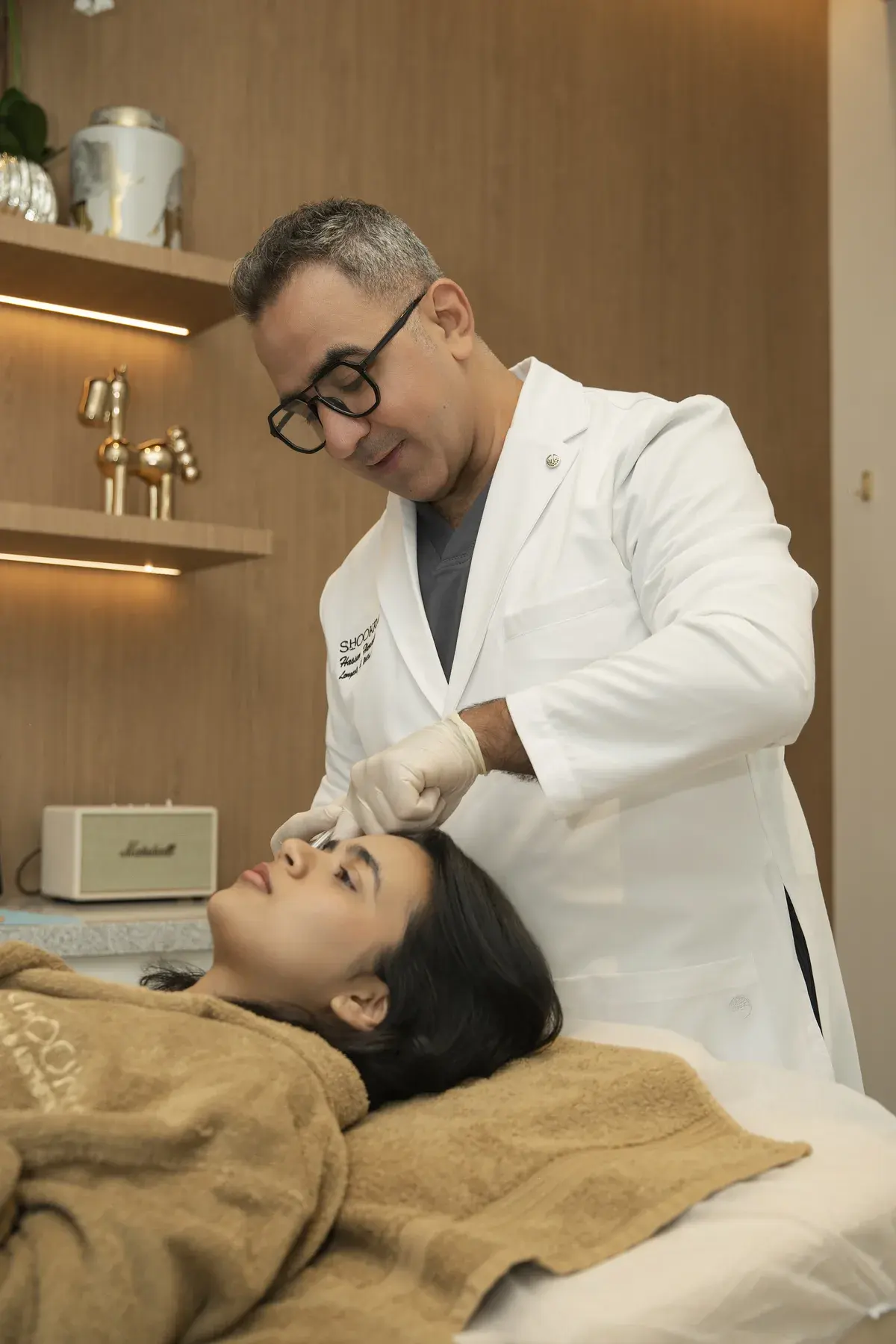
A doctor-led skin assessment maps hydration, elasticity and the areas to treat, then the skin is cleansed and a numbing cream applied for comfort.
- 02
Micro-injection session
Precise micro-injections place the booster into the dermis across the target zones. A session typically takes around 30–45 minutes.
- 03
Aftercare & progressive results
Calming serums and sun protection are applied. Mild redness, swelling or small bumps at the injection sites may occur and usually settle within 24–48 hours. Hydration is often noticeable within the first days, while improvements in texture and elasticity develop over the following weeks as the skin remodels.
Skin Booster Results: When They Show and How Long They Last
Boosters are gradual by design, which is part of why they look natural. An initial course is commonly two to three sessions spaced about four weeks apart, with hydration noticeable within one to two weeks and the fuller effect on texture and quality building over roughly two to three months as collagen support develops. Effects typically hold for around six months before maintenance. Results vary between individuals.
- First 24–48 hours
- Small injection bumps are normal and settle within a day or two. Mild bruising is possible.
- Weeks 1–2
- Hydration and a softer light reflectance are usually the first things people notice.
- Months 2–3
- The fuller effect on texture and skin quality, once the collagen response has developed.
- Around 6 months
- Typical point for a maintenance session. Your clinician sets the interval from how your skin holds it.
Meet Your Practitioner
On Skin Boosters
The most useful thing to understand about skin boosters is what they are not. They are not a filler — we are not adding volume or changing the shape of a feature. We are improving the quality of the skin itself: its hydration, its texture, the way it reflects light. I tend to recommend them for patients whose skin reads as dry, dull or a little crepey, often on the cheeks, under-eyes, neck or hands. Most protocols run as a short series of sessions a few weeks apart, with results that build gradually rather than appearing overnight, and we confirm what suits your skin at consultation.
 Dr. Nihal HusseinAesthetic & Functional Medicine · DHA-licensed
Why Choose Shookra for Skin Boosters
 01
01Physician-led
Every protocol is planned and supervised by a DHA-licensed doctor.
 02
02Measured, then treated
We read your skin before we treat it, so the plan fits you — not a template.
 03
03Managed over time
Your care is tracked and adjusted as part of one practice, not one-off visits.
 04
04Medical-grade
Clinical protocols and equipment, in a discreet Dubai clinic.
Skin Booster Questions
01How are skin boosters different from dermal fillers?
02Which areas can be treated?
03How many sessions will I need, and when will I see results?
04Is there any downtime?
05Are skin boosters suitable for me?
06What do skin boosters cost at Shookra?
07Do skin boosters really work?
08What age should you start skin boosters?
09How are skin boosters different from fillers?
010How long do skin boosters last?
Where we do it
Skin Boosters in Dubai
Dubai· Business Bay
ShookraRetail 3, 15, Northside, Business Bay, Dubai, UAE+971 50 320 4553Open Mon–Sun · 10:00–22:00
View on Google MapsDubai · Palm Jumeirah
ShookraAndaz Dubai The Palm, 3rd Floor, Palm Jumeirah Rd, Palm Jumeirah, Dubai, UAE+971 50 320 4553Open Mon–Sun · 10:00–22:00
View on Google MapsLicensed & Regulated
DHA-licensed. MOHAP-approved.
Every treatment is delivered at Shookra, a DHA-licensed medical facility in Dubai. Every physician and clinician on our team is DHA-licensed and works to clinical protocol. Our health communications are independently reviewed and approved by the UAE Ministry of Health & Prevention (MOHAP).
Shookra Polyclinic · DHA Facility Permit #3449309 · MOHAP Advertisement Licence T0UOE5NK-020526

Book a consultation
Book your Skin Boosters consultation.
Speak with our team on WhatsApp — we’ll talk through your goals, suitability and pricing.